
A Dish-Drying Setup for a Small Counter
Choose a rack, mat, and cleanup routine that leave room to cook after the dishes are washed.
Our guides explain practical buying considerations; they do not represent hands-on product tests. The shopping links below are ordinary retailer links and currently do not earn us a commission. How our links work.
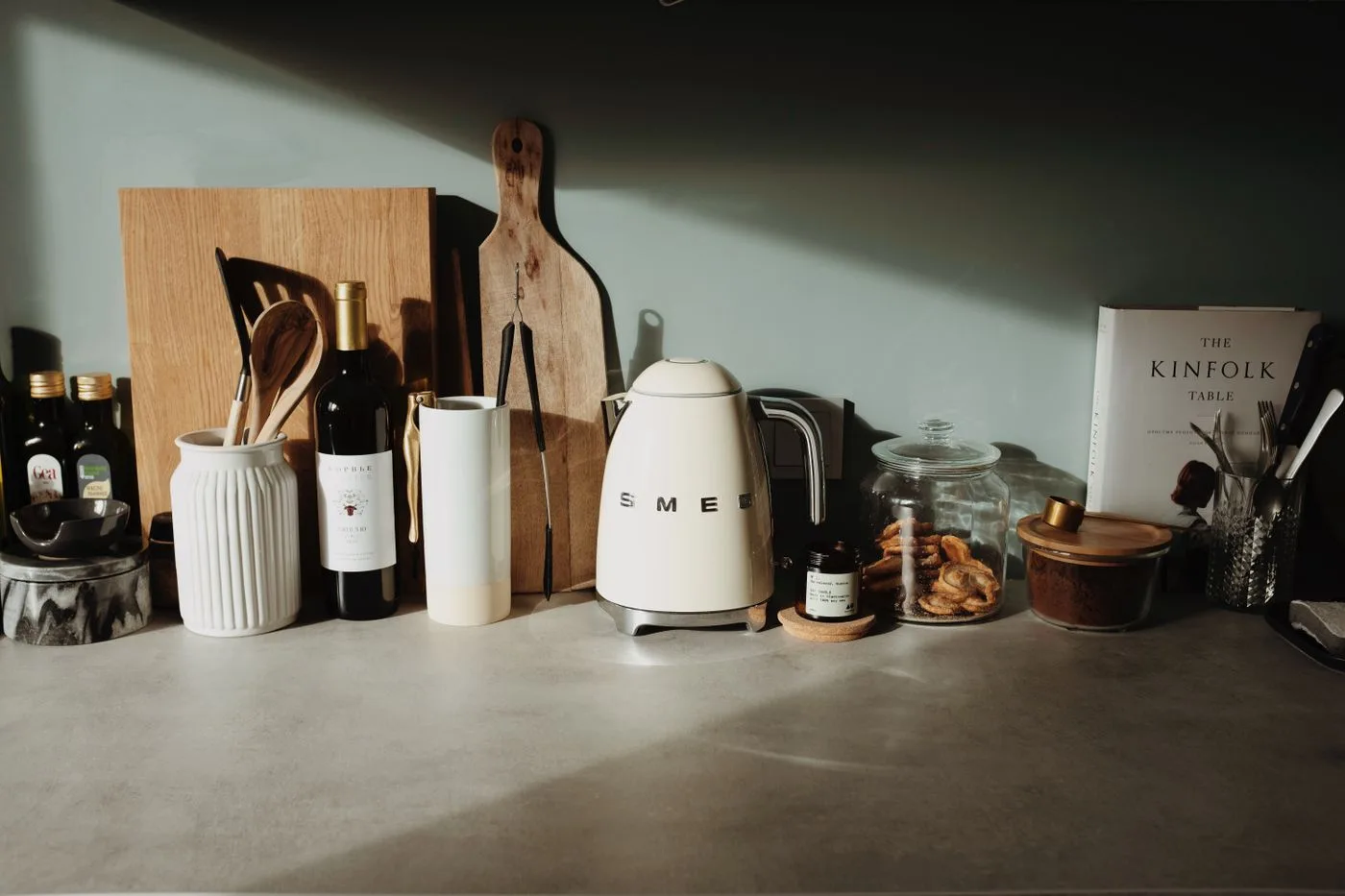
A dish rack can quietly become the largest permanent object in a small kitchen. Even when the dishes are put away, the rack may occupy the only good chopping space. The goal is not to own the smallest rack at any cost. It is to handle the dishes you wash by hand while keeping the counter usable and the sink area able to dry.
Count the handwashed dishes
Look at a normal day rather than a holiday dinner. If most dishes go into a dishwasher, your rack may only need to hold a pan, a knife handled safely, and a few cups. If everything is washed by hand, plate slots, utensil capacity, and drainage become more central. A rack sized for an imagined party can burden the counter every other day.
Measure beside the sink with the faucet in its usual position. Include handles, drain spouts, and space to lift items out. Check the cabinet above if tall plates or bottles will stand upright. A rack that fits the footprint but prevents a cabinet door from opening is not a good fit.
Choose how water will leave
Some racks drain toward the sink through a tray or spout; others collect water that must be emptied. Check the sink lip and counter slope before assuming a drain feature will work. A spout that stops short or sits at the wrong height can leave water where you do not want it. Follow the product's installation and cleaning directions.
Drying mats are flexible and can be stored when not needed, but they require their own drying and laundering routine. A damp mat left permanently under dishes can become another cleaning task. An over-sink design may free counter space but reduces access to the basin while in use. Every option moves the compromise rather than eliminating it.
| Kitchen pattern | Useful setup | Main compromise |
|---|---|---|
| Few handwashed items | Compact rack or manageable mat | Limited room for a large pan |
| All dishes washed by hand | Organized rack with practical drainage | More permanent counter space |
| Counter needed for prep | A stowable arrangement | Must be dried and put away consistently |
| Very small sink zone | Carefully fitted over-sink option | Can interfere with faucet or basin access |
Check the objects that are difficult to place
Bring the dimensions of your largest regularly washed pan and your usual plates into the decision. A rack with many slots may still struggle with a broad skillet. Cups need a stable place, not a balancing act on top of plates. Tall bottles may require a separate drying position if the rack does not support them safely.
Handle knives deliberately and avoid leaving exposed blades where someone reaching for a cup might encounter them. Follow safe washing and storage practices rather than treating a general utensil cup as appropriate for every sharp tool. The arrangement should be obvious to everyone who uses the kitchen.
Make cleaning access a purchase criterion
Look at how the tray separates, whether corners are reachable, and whether small parts can be removed and reinstalled. A rack can look streamlined while hiding narrow areas that are difficult to clean. Material labels do not remove the need for regular washing and drying. Check the manufacturer's care instructions, including whether components tolerate a dishwasher.
Inspect the surface beneath the setup as part of the routine. Water can collect where you cannot see it. Countertop finishes have their own care requirements, and prolonged moisture may be a problem for some materials. A drying system should help manage water rather than conceal it.
Pair the rack with the right towel
A clean towel is useful for drying items that do not sit well in the rack and for wiping the surrounding counter. Keep separate cloths for different jobs when needed; a towel used to clean a spill should not automatically become the towel for clean dishes. Wash and dry kitchen textiles according to their care labels and the tasks they perform.
You do not need a large bundle of decorative towels. A manageable rotation of absorbent, washable cloths is often more useful. Choose a place where used towels can dry between appropriate laundering, rather than leaving them in a wet heap beside the sink.
What to skip
Skip multi-level racks that exceed your cabinet clearance or create unstable loading. Avoid elaborate accessories for dishes you do not own. If your current rack works, try emptying it before starting dinner and storing the mat after it dries. A routine change may recover more counter space than a new purchase.
Is a drying mat enough on its own?
It can be for a small number of suitable items, provided they sit securely and the mat is maintained. Tall glasses and heavy pans may need more structured support.
Should a rack stay out all the time?
Only if that suits the kitchen. A stowable system works when there is a clean, dry storage place and someone will actually put it away. Choose the routine you can sustain.
Explore your options
Use these retailer collections to compare current choices. Check the exact dimensions, materials, care instructions, delivery costs, and return terms before ordering.
Browse dishwashing accessories
Consider it for: Compare drainage, cleaning access, and real dish capacity.
Keep in mind: Compact racks may not hold a large pan securely.
Browse retailer options ↗Browse kitchen towels
Consider it for: Build a small washable rotation for drying and sink cleanup.
Keep in mind: Textiles need their own drying and laundering routine.
Browse retailer options ↗Sources & further reading
Editorial information and linked destinations reviewed October 6, 2026. Product ranges and specifications can change. Send a correction or a question.
A little more inspiration
More Kitchen ↗
Choose an Everyday Skillet Around What You Cook
Compare stainless steel, cast iron, and nonstick for weeknight meals, cleanup, and storage.
4 MIN READ
The Cutting Board That Fits Your Kitchen and Your Routine
Choose a prep board around usable space, washing, knife care, and the food you cook.
4 MIN READ
Food Containers That Make Leftovers Easier to Use
Build a manageable storage collection around portions, visible food, lids, and the way you reheat.
4 MIN READ