
Kitchen Towels and Aprons That Earn Their Drawer Space
Choose absorbent cloths, manageable care, and an apron that supports everyday cooking.
Our guides explain practical buying considerations; they do not represent hands-on product tests. The shopping links below are ordinary retailer links and currently do not earn us a commission. How our links work.
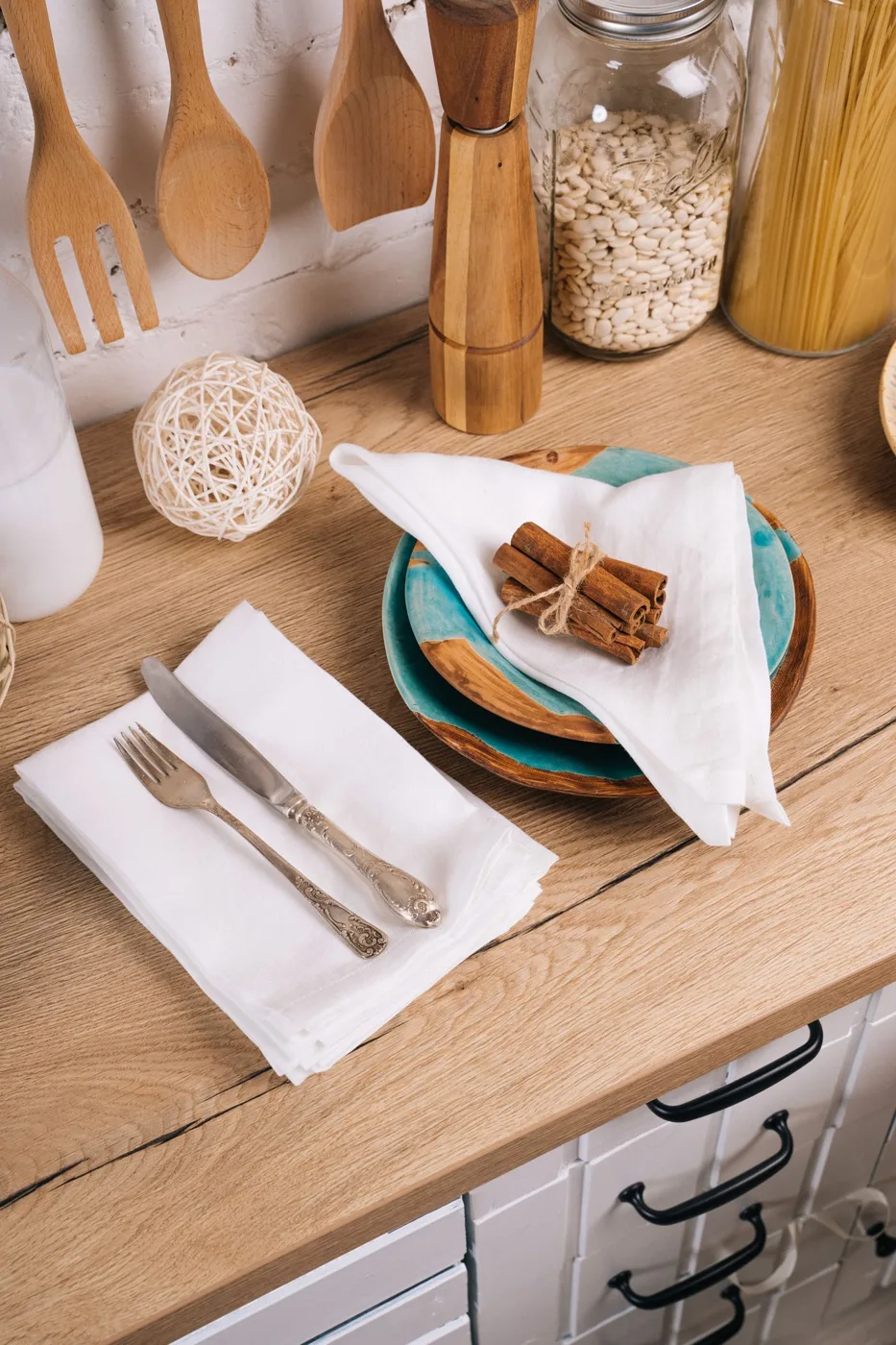
A kitchen textile should do more than coordinate with the cabinets. Towels dry dishes and hands, cloths clean surfaces, and an apron keeps splashes away from clothing. When every item is treated as interchangeable, the drawer grows while the useful supply still seems to run out. Give each textile a job, then buy a small rotation that can be washed and dried reliably.
Separate the everyday jobs
Consider three needs: drying clean dishes, drying hands, and cleaning spills or surfaces. Keeping a clear distinction can make the kitchen easier to manage. A cloth used on a messy counter should not immediately be used on clean dishes. The exact routine depends on what was cleaned, but having recognizable towels for different tasks reduces confusion.
You can distinguish them by color, location, or texture. An elaborate label system is unnecessary if the household will not use it. A dish towel beside the drying rack and a hand towel on an accessible rail may be enough. Keep clean replacements somewhere easy to reach so changing a used cloth is not an inconvenience.
Choose absorbency and feel over decoration
Fabric structure and finishing affect how a towel behaves. A smooth tea towel, a looped terry towel, and a textured weave can feel very different in use. Fiber content alone does not guarantee that a product will absorb well or leave no lint. Read the care instructions, and expect that some new textiles may need washing before their first use.
Large decorative tassels, thick embroidery, or delicate trim may be attractive but get in the way of everyday drying. If you want a display towel, treat it as a separate choice rather than relying on it for every practical job. The working towels can be simpler and easier to wash.
| Main job | Useful quality | Potential drawback |
|---|---|---|
| Drying dishes | Absorbency and manageable lint | Decorative trim can be awkward |
| Drying hands | Comfortable texture and easy access | A damp towel needs replacing or drying |
| Wiping counters | A washable, task-appropriate cloth | Must not be confused with clean-dish towels |
| Protecting clothing | An apron with useful coverage | Bulky ties or pockets may be inconvenient |
Make drying between uses possible
A towel left crumpled beside the sink may stay damp. Provide a place where it can hang with enough exposure to dry, while keeping it away from heat sources and food preparation hazards. Hooks and rails should be positioned so the towel does not drag on the floor or fall into the sink.
Launder according to the textile label and the task it has performed. Follow appropriate food-safety advice when cloths have contacted raw-food spills or other contamination. Do not rely on a towel's pleasant smell or clean appearance as proof that it is ready for every use. A manageable rotation makes replacing used cloths easier.
Choose an apron around movement
Try to picture reaching for a high shelf, leaning toward a cutting board, and bending to open the oven. An apron should allow those movements without pulling at the neck or leaving long loose ties in the way. Adjustable straps can be useful, but their range and fastening style need to suit the wearer.
Pockets are convenient for a timer or a small tool, yet they can collect crumbs and tempt you to carry sharp objects unsafely. Choose pocket placement based on what you will actually put there. A heavy fabric may feel protective but warm; a lighter fabric may be more comfortable but offer less coverage against splashes. An ordinary apron is not specialized heat or protective equipment.
Do not substitute towels for proper heat protection
A dish towel is not automatically an oven mitt. Damp fabric can transfer heat quickly, and thin or loose material may provide inadequate protection. Use appropriate dry heat-resistant protection for hot cookware, following the product instructions. Keep textiles clear of burners and heating elements. Convenience should not determine which cloth happens to be nearest a hot handle.
Buy enough for the laundry rhythm
Count how many useful towels you go through between normal laundry days. Add a reasonable margin, then stop. A huge bundle can fill a drawer with thin or unsuitable pieces while your favorites are always in the wash. It may be better to buy a few practical towels and replace worn ones selectively.
Skip matching collections that include sizes you will not use. Spend on a care routine you can sustain, secure apron straps, and textures suited to the jobs. Color can still be enjoyable, but it should not be the only reason an item enters the drawer.
Are white towels impractical?
They show marks clearly, which some people find useful, but their care still depends on the fabric and label. Choose a color you are willing to maintain rather than assuming one color is universally cleaner.
Can one apron serve everyone?
Sometimes, if the adjustment range and coverage work. If several people cook together or differ substantially in size, separate aprons may be more comfortable than constant readjustment.
Explore your options
Use these retailer collections to compare current choices. Check the exact dimensions, materials, care instructions, delivery costs, and return terms before ordering.
Browse kitchen towels and textiles
Consider it for: Choose cloths by job, texture, and laundering requirements.
Keep in mind: Decorative details may interfere with practical drying.
Browse retailer options ↗Browse sink-side accessories
Consider it for: Give working cloths and clean dishes a manageable drying area.
Keep in mind: Extra accessories can crowd limited counter space.
Browse retailer options ↗Sources & further reading
- Browse kitchen towels and textiles — merchant selection
- Browse sink-side accessories — merchant selection
Editorial information and linked destinations reviewed October 6, 2026. Product ranges and specifications can change. Send a correction or a question.
A little more inspiration
More Kitchen ↗
Choose an Everyday Skillet Around What You Cook
Compare stainless steel, cast iron, and nonstick for weeknight meals, cleanup, and storage.
4 MIN READ
The Cutting Board That Fits Your Kitchen and Your Routine
Choose a prep board around usable space, washing, knife care, and the food you cook.
4 MIN READ
Food Containers That Make Leftovers Easier to Use
Build a manageable storage collection around portions, visible food, lids, and the way you reheat.
4 MIN READ